

Climate logic in Vastu: heavy south-west, south-east kitchen, trees and entrances
25 October 2026 · 6 min read
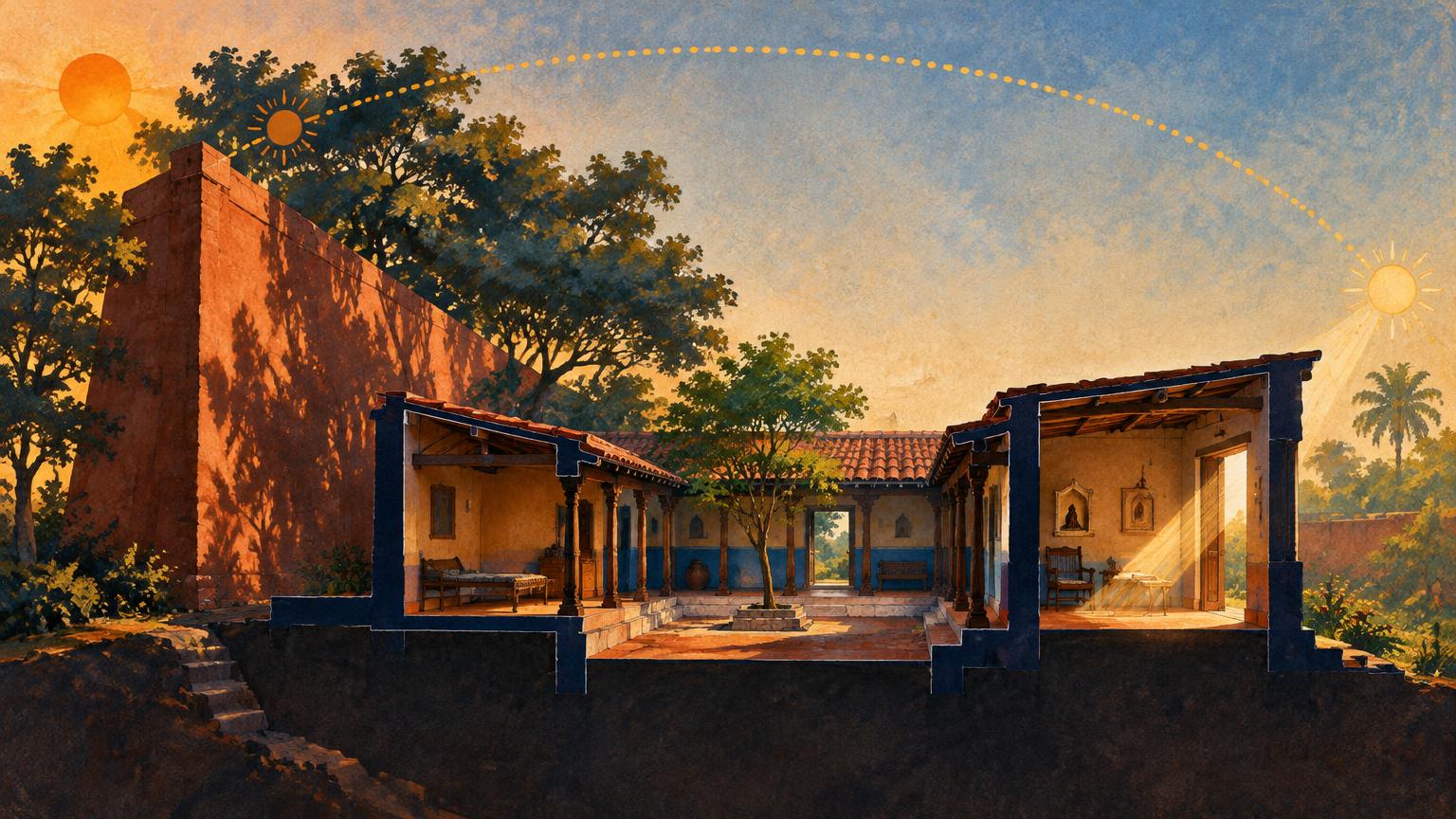
Mass in the south and south-west
SupportedVastu asks for the heaviest, tallest parts of a site in the south and south-west. Purkar et al. (2019) read this as shading: a tall mass there casts shadow on the main building during the hot afternoon, when the sun is low in the south-west sky.
Kitchen in the south-east
PlausibleĀgneya (SE) is the traditional kitchen zone. The paper notes that in much of India the prevailing wind comes from the north-west, so a kitchen diagonally opposite is downwind: smoke and smells leave the house rather than drift through it, and a fire is less likely to be fanned towards the rooms.
Trees: shade the west, open the east
SupportedBig trees are kept off the east and north-east so morning sun can reach the house, and planted to the south, south-west and south-east where they shade low afternoon sun. This matches standard passive-design advice on using trees as shading devices.
Entrance in the east or north
PlausibleAn east or north entrance avoids the hot, glaring western sun and gives a shaded, cooler threshold where people adjust before stepping inside. Prevailing wind directions differ by region, so check local climate data before relying on any one rule.
References
- Purkar, P., Narad, A. V. & Kothalkar, P. (2019). Vedic Vaastushastra: A Scientific Approach. Journal of Civil Engineering and Environmental Technology, 6(1), 6–10. Krishi Sanskriti Publications.
- Givoni, B. (1998). Climate Considerations in Building and Urban Design. Wiley.
- Sahasrabudhe, N. H. & Mahatme, R. D. Secrets of Vastushastra. ISBN 81-207-2042-3. (as cited in Purkar et al. 2019)
Advisory: Vastu guidance is traditional and does not predict health, wealth or events.