

Courtyards, cross-ventilation and the Brahmasthan
24 October 2026 · 5 min read
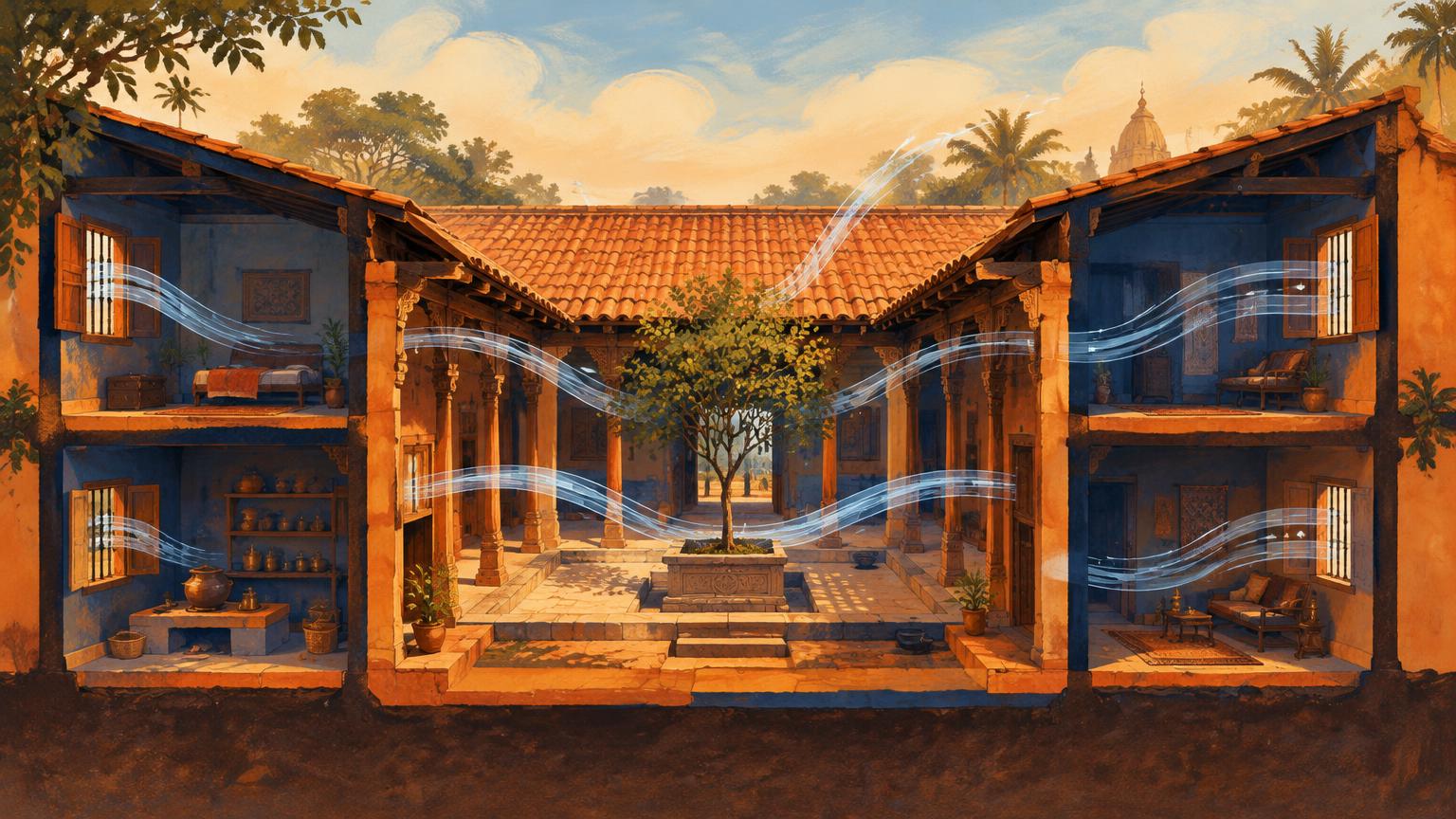
Vāyu in the north-west
Traditional beliefVastu places the air element (वायु) in the north-west and asks for openings on opposite sides of rooms. Combined with an open centre, this sets up a path for air to move through the home.
Why fresh air matters
SupportedIn a double-blind study, office workers scored about 61% higher on cognitive tests in well-ventilated, low-CO₂ conditions than in typical conditions, and higher still with extra ventilation (Allen et al., 2016).
The courtyard as a chimney
SupportedAn open courtyard lets warm air rise and leave while cooler air is drawn in through rooms — the stack effect. Givoni describes courtyards as an effective passive-cooling form for hot climates.
Putting it together
PlausibleKeeping the Brahmasthan open and the north-west airy is a traditional rule that lines up well with ventilation practice. Mechanical ventilation and window placement can achieve the same result in a flat without a courtyard.
References
- Allen, J. G. et al. (2016). Associations of cognitive function scores with carbon dioxide, ventilation, and volatile organic compound exposures in office workers. Environmental Health Perspectives, 124(6), 805–812.
- Givoni, B. (1998). Climate Considerations in Building and Urban Design. Wiley.
- Dagens, B. (trans.) Mayamata, chapters on the site plan and central courtyard. 1994.
Advisory: Vastu guidance is traditional and does not predict health, wealth or events.