

The ten directions and their guardians
25 October 2026 · 5 min read
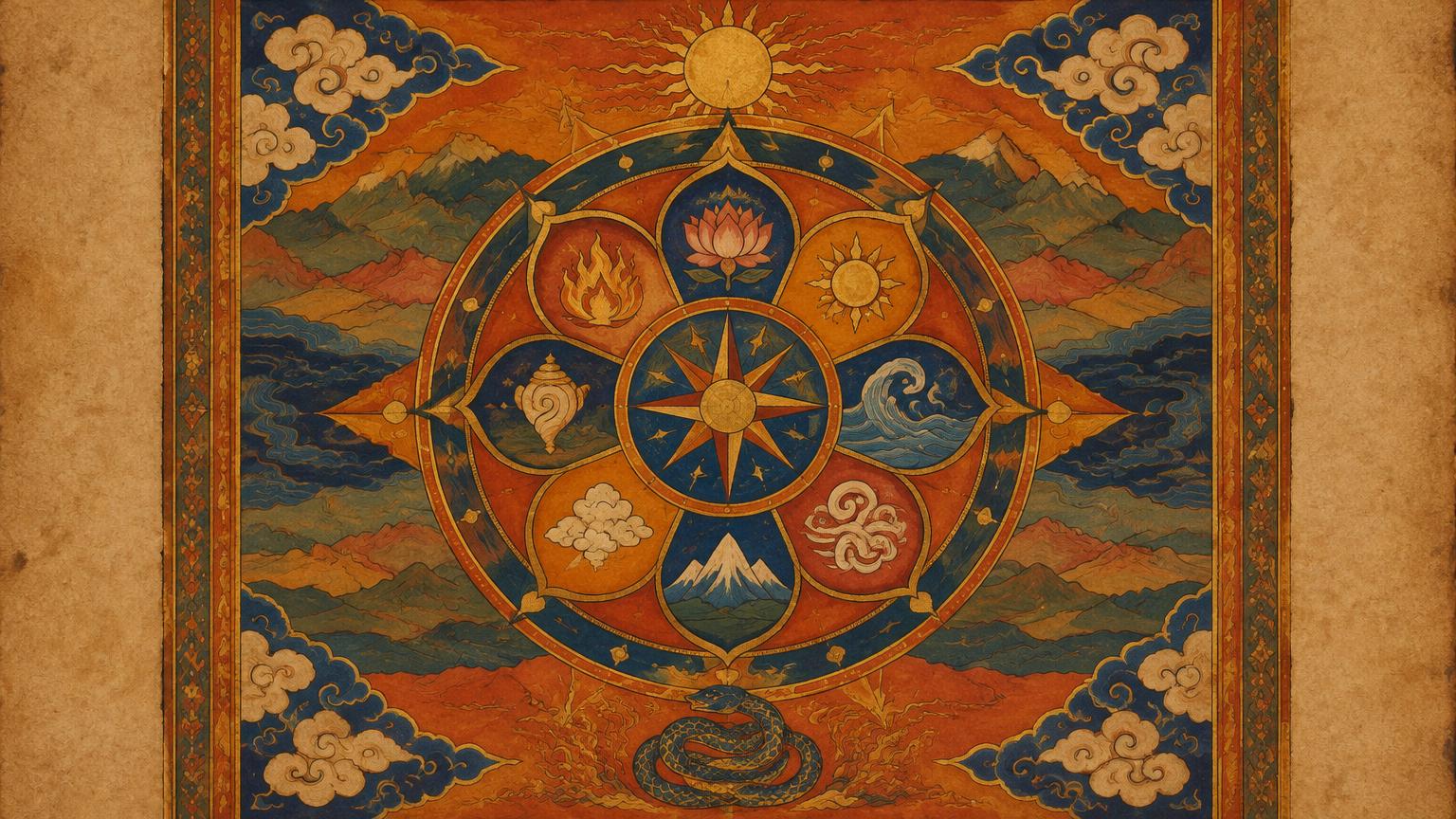
Ten, not eight
Traditional beliefVastu counts ten directions (दशदिशा): the four cardinal points, the four corners — Īśānya (NE), Āgneya (SE), Nairṛtya (SW), Vāyavya (NW) — and Ūrdhva (above) and Adhara (below). Purkar, Narad and Kothalkar (2019) summarise them in a single chart that links each direction with a guardian and a set of rooms.
Guardians and rooms
Traditional beliefNorth — Kubera (कुबेर): living room, office, entrance. North-east — Īśāna (ईशान): pooja room, well or underground water tank. East — Indra (इन्द्र): entrance, guest room, verandah.
South-east — Agni (अग्नि): kitchen, generator, power supply. South — Yama (यम), the southern guardian: back yard, kitchen garden. South-west — Nirṛti (निरृति): the heaviest part of the house, store, utilities.
West — Varuṇa (वरुण): overhead tank, study room. North-west — Vāyu (वायु): bedrooms. Above — Brahmā (ब्रह्मा): the open courtyard. Below — Ananta (अनन्त): basement.
Reading the chart sensibly
PlausibleSeveral pairings follow the sun and wind: a south-east kitchen gets morning light, an east entrance admits early sun, and a north-west bedroom catches the breeze. The deity associations themselves are symbolic and are not something a study can test.
References
- Purkar, P., Narad, A. V. & Kothalkar, P. (2019). Vedic Vaastushastra: A Scientific Approach. Journal of Civil Engineering and Environmental Technology, 6(1), 6–10. Krishi Sanskriti Publications.
- Kramrisch, S. (1976). The Hindu Temple. Motilal Banarsidass. (as cited in Purkar et al. 2019)
- Shukla, D. N. (1993). Vāstu Śāstra: Hindu Science of Architecture. Munshiram Manoharlal. (as cited in Purkar et al. 2019)
Advisory: Vastu guidance is traditional and does not predict health, wealth or events.